
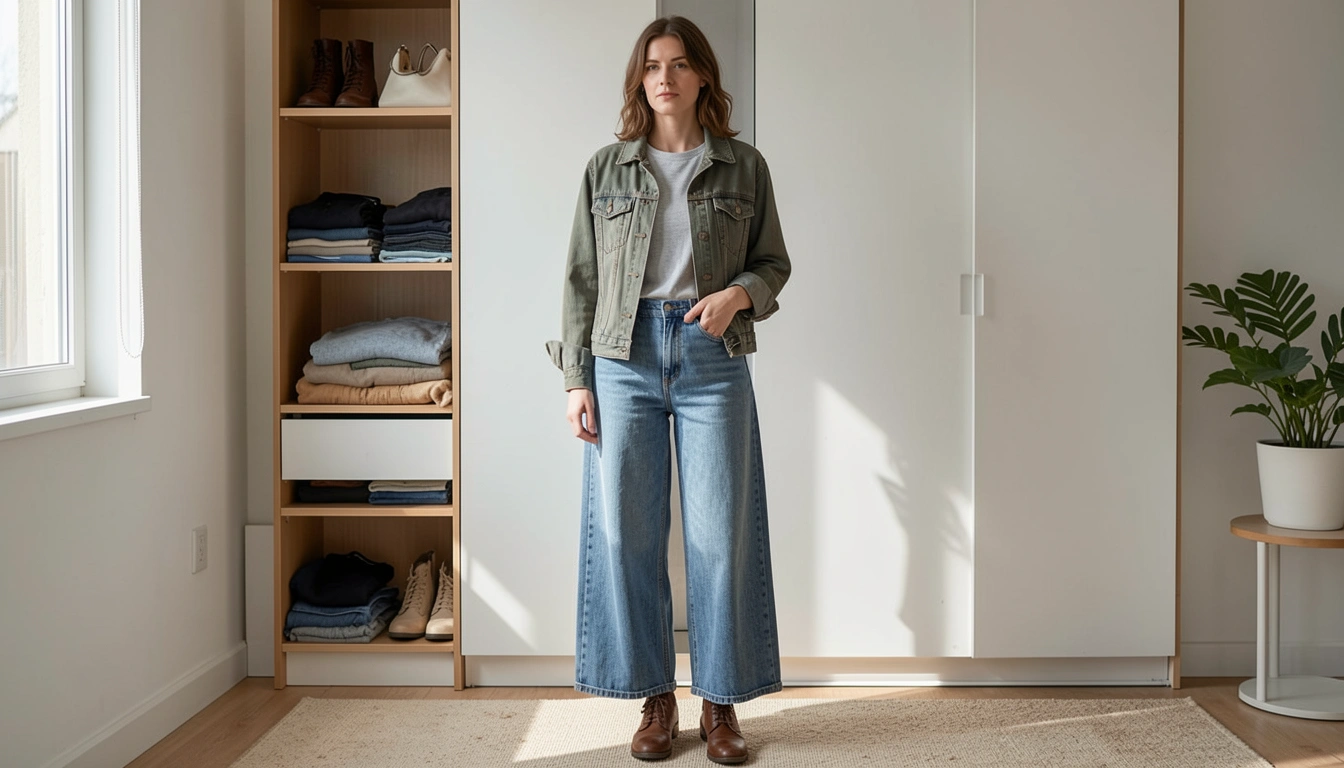
How To Style Capsule Wardrobe Style
You pull out a few favorite pieces that should work, but the whole thing still sits flat. Nothing feels quite connected. The lengths are off or the fabrics pull against each other without reason.
I’ve stood in front of my closet like that more times than I can count, wondering why the clothes I actually like never seem to land right together.
How To Style Capsule Wardrobe Style
This approach shows you how to combine a small group of reliable pieces so the outfit holds together without extra effort. You end up with outfits that feel balanced from the start.
What You’ll Need
- Beige cotton crewneck tee (https://amazon.com/example)
- Navy merino wool cardigan (https://amazon.com/example)
- Straight-leg khaki chinos (https://amazon.com/example)
- Lightweight white button-up shirt (https://amazon.com/example)
- Charcoal wool-blend coat (https://amazon.com/example)
- Simple black leather loafers (https://amazon.com/example)
- Thin brown leather belt (https://amazon.com/example)
Step 1: Choose one solid base color to anchor everything
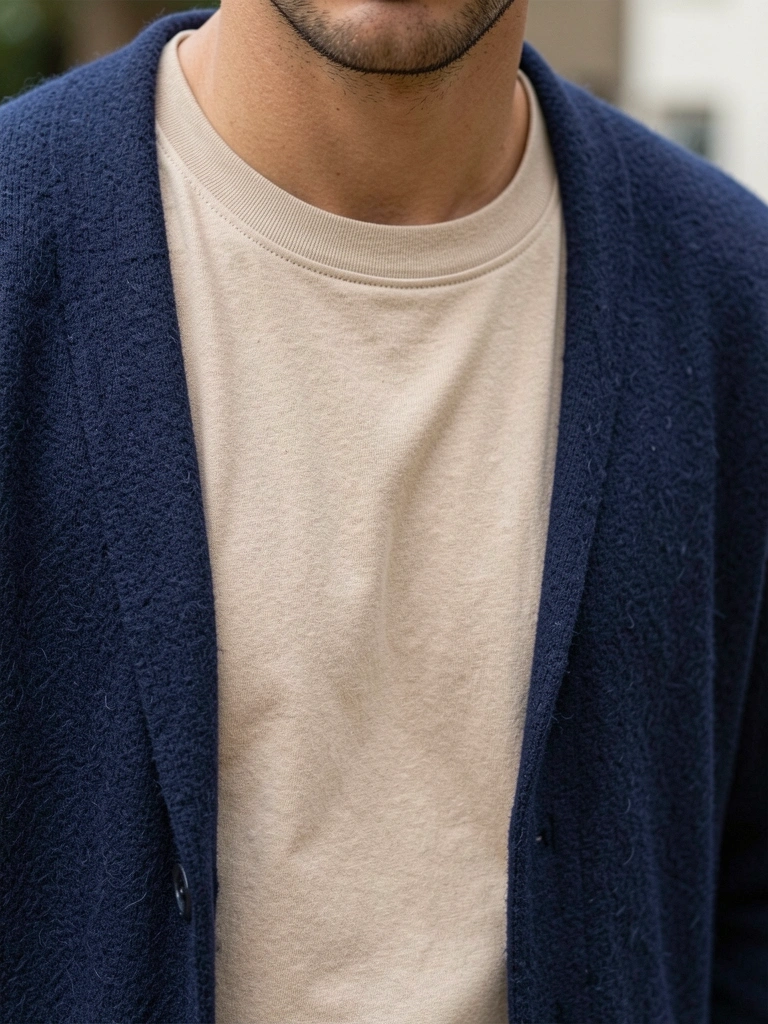
I usually start by picking the item that will sit closest to my skin. A plain tee or simple shirt in one steady neutral gives everything else a place to land. When the base color is calm, the rest of the outfit has less to fight against.
The difference shows up right away in how the layers settle. The eye stops jumping between too many competing tones. One small thing I still catch myself doing is choosing a base that’s already patterned or too bright. That choice makes the other pieces feel crowded even when they’re simple.
Step 2: Add one mid-layer that reaches past the base hem
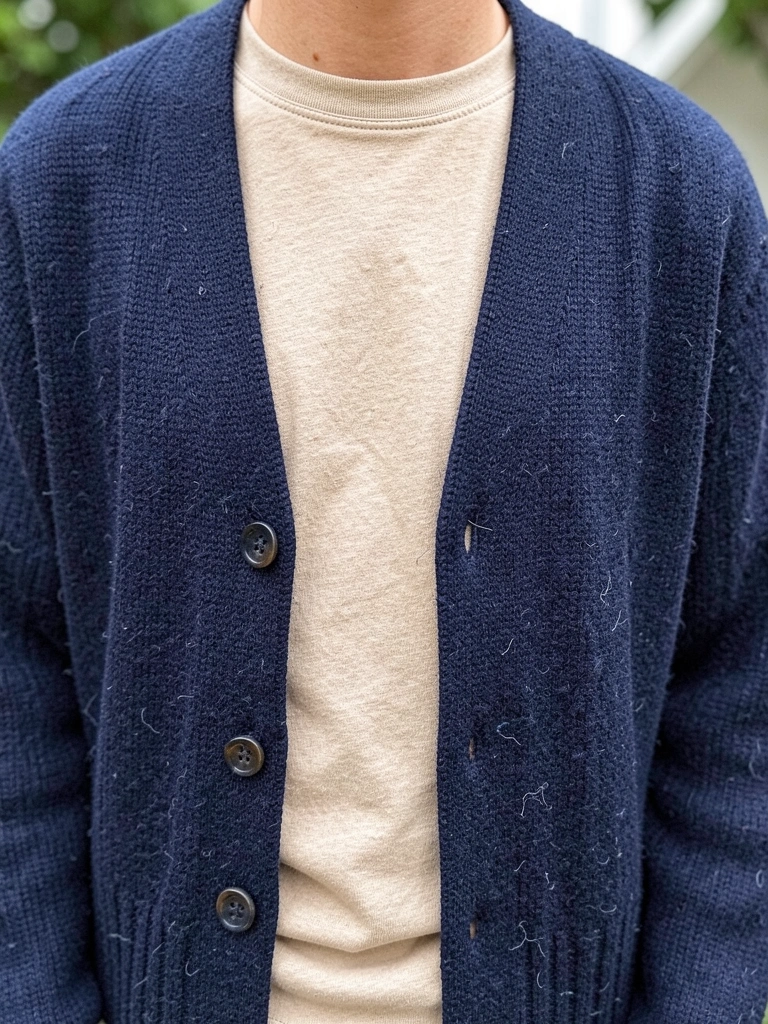
The mid-layer is what starts to create shape. I look for something that covers the base hem by a few inches so the two pieces don’t end at the same line. A cardigan or light overshirt works well here because it adds softness without bulk.
You notice the change in how the waist looks. The outfit stops cutting you in half at one single point. A mistake I still make is grabbing a mid-layer that’s the same length as the top underneath. Then the whole middle section flattens out again.
Step 3: Let the bottom half keep a clean line
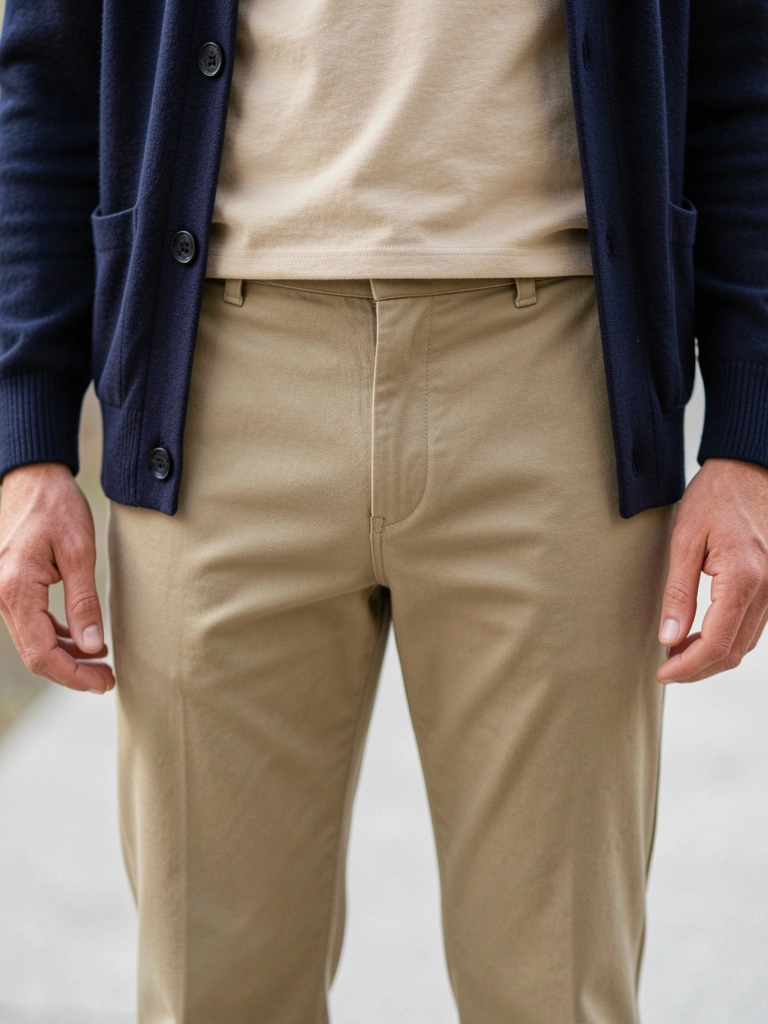
Once the top half is set, the pants or skirt should continue that same quiet feeling. I choose a straight or slightly tapered shape so the eye keeps moving downward instead of stopping at the hips. The fabric weight should feel similar to the layers above.
The outfit suddenly reads as one complete shape rather than separate sections. What people often miss is checking how the hem of the mid-layer sits against the waistband. If it bunches or gaps, the balance you just built disappears.
Step 4: Bring in one outer piece only if it adds length or coverage
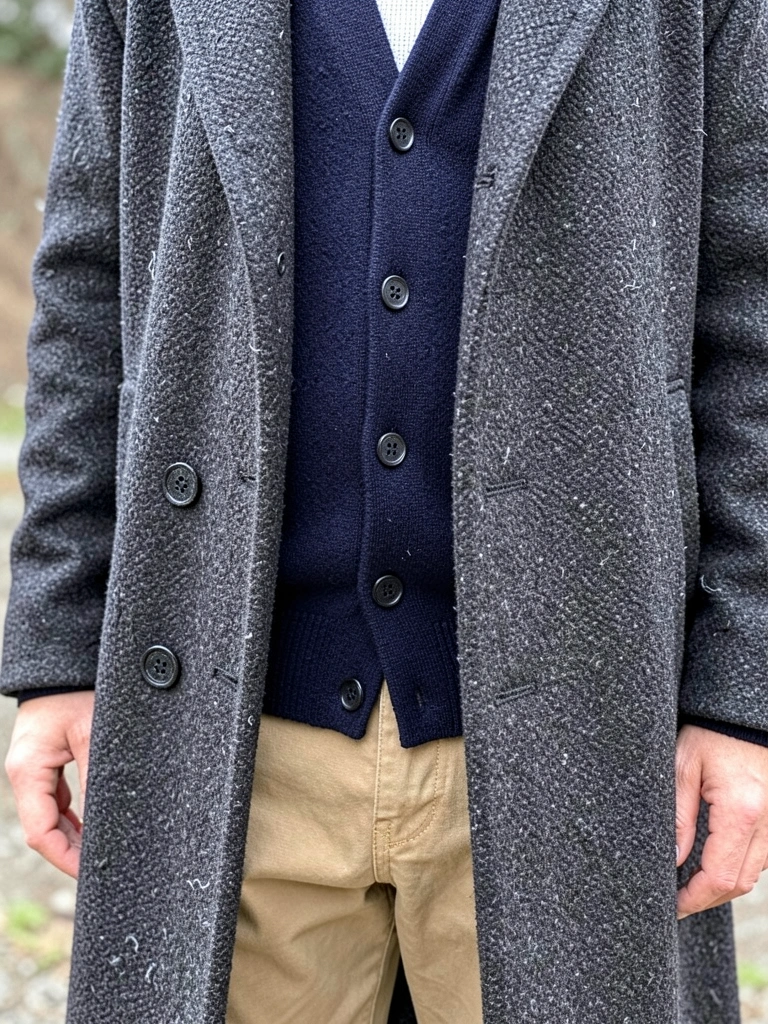
I keep coats or jackets for last and only add them when the look still feels short or unfinished. The coat should be long enough to cover the cardigan hem so the vertical line stays smooth. One layer too many and the outfit starts to feel heavy.
You can feel the difference the moment you put it on. The proportions hold even when you move. The mistake here is reaching for a short jacket that cuts across the middle again.
Step 5: Finish with one small detail that matches the belt or shoes
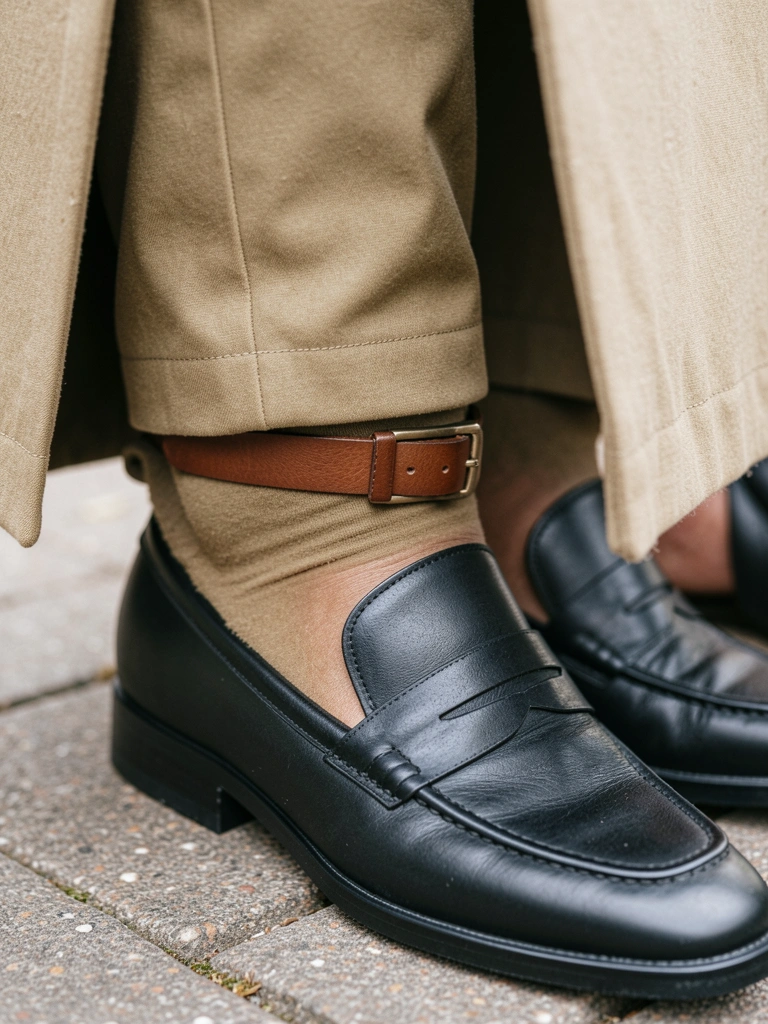
A belt or simple shoes in the same tone as one of the fabrics above pulls the whole thing together without adding color. I keep this step small. One matching detail is enough once the layers are already balanced.
The outfit feels finished rather than stripped bare. The only thing I watch for is choosing a detail that’s too shiny or bold. It pulls attention away from the quiet shape you built.
Checking Proportions in the Mirror
Stand back and look at where each hem lands. The lines should move downward without repeating the same stopping point twice. If two hems sit at the same height, the outfit feels cut short even when the pieces are right.
When to Add or Remove a Layer
Try the outfit while moving around. If the mid-layer feels too warm or the coat feels unnecessary, take it off and check the shape again. Removing one piece often restores the balance faster than adding something new.
- Keep the base and bottom fixed
- Test each layer one at a time
- Stop when the outline feels steady
Keeping the Same Pieces in Rotation
Once the core group works, you can swap one item at a time. Replace the cardigan with the button-up shirt or change the pants color while keeping the same neutral base. The rest of the outfit stays familiar.
Final Thoughts
Start with just three pieces that already feel comfortable. Wear them together twice before adding anything else. You learn more from repeating the same simple combination than from trying many new ones at once.
Over time the choices become quicker because the shape already makes sense. The closet starts to feel smaller in a useful way.