How To Fold Jeans To Save Space
I shove jeans into a drawer and then forget what’s at the bottom. Outfits feel heavy because pieces are wrinkled or lost.
I want my closet to feel calm and my mornings to be quick. I want to grab jeans that fit without thinking.
Folding fewer times and smarter fixes that.
How To Fold Jeans To Save Space
I’ll show how I fold jeans to shrink drawer bulk and keep pairs visible and ready. I use a simple method that works for different fits and leaves jeans standing like a neat, tidy file.
What You’ll Need
- Straight-leg denim, mid-weight, dark wash
- Skinny jeans, black stretch denim
- High-rise wide-leg jeans, light wash
- Cropped raw-hem jeans, breathable cotton blend
- Lightweight denim jacket (for stacking reference)
- Shallow dresser drawer or low open shelf (clean, uncluttered)
- Soft fabric drawer dividers, narrow
Step 1: Sort by fit and fabric weight so folding matches the feel
I start by grouping jeans into similar fits and fabric weights. I find that rigid, raw denim behaves differently from stretch blends. Sorting first means my stacks sit evenly and don’t slump.
Visually the pile immediately looks lighter and more intentional. Heavier jeans form a shorter, denser stack; stretch pairs sit slimmer and taller. An insight I missed at first: pocket bulk matters as much as fabric weight. A small mistake I make sometimes is mixing heavy and light in the same stack — that makes the whole row lopsided.
Step 2: Smooth, align, and check the waistband and pockets
I take each pair and smooth the waistband and legs with my hands. I line up the back pockets so the silhouette is flat. The feel of the fabric tells me where the bulk hides.
The visual change is subtle but real — edges become crisp and the fold reads as a single shape. An insight I learned later: turning the back pockets slightly inward hides lumps and makes folding neater. A common slip-up I notice is folding with cards or a wallet still inside the pocket, which ruins the tidy line.
Step 3: Fold into a compact shape that stands
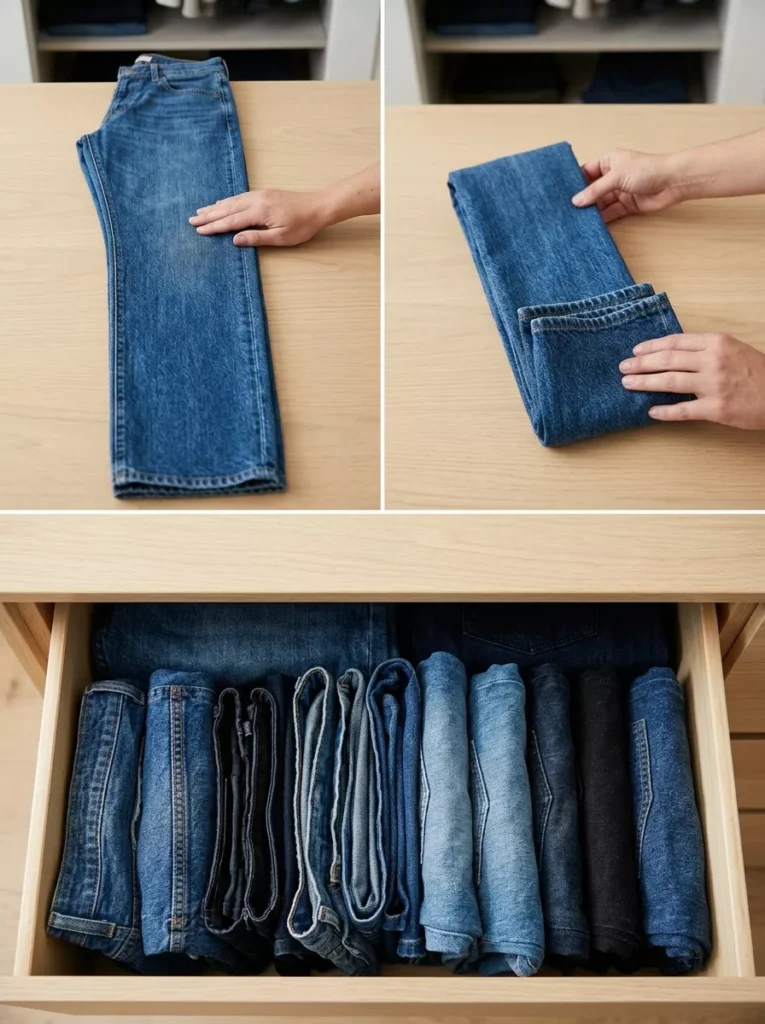
I fold lengthwise to get a narrow profile, then fold up into a compact rectangle that I can stand on its edge. I choose the number of folds by how rigid the denim is so the final block is stable and not floppy.
This changes the drawer look from flat piles to visible spines, like magazines. The insight I didn’t see at first: folding to stand conserves depth and gives immediate visibility. A small mistake I often catch is over-folding tight stretch jeans until they lose their shape — I keep the fold gentle so they bounce back.
Step 4: Arrange upright, alternate weight and color for balance
I set each folded pair upright in the drawer, alternating heavier and lighter pairs and mixing dark and light washes. I want the drawer to feel balanced and easy to scan with my eye.
Visually the drawer becomes a neat row where every pair is readable from the top of the stack. I learned that alternating weight prevents the drawer from sagging on one side. One mistake I still correct: sliding everything in crooked. When a single pair leans, it quickly topples the neighbor, so I nudge each piece upright as I go.
Step 5: Keep the habit — quick refreshes and tiny rules
I refold a worn pair before putting it back. I treat the drawer like a living system: a two-minute tidy twice a week keeps it working. I also give special treatment to wide-leg or lined jeans so they don’t overwhelm the row.
The drawer stays usable and calm rather than a pile I avoid. An insight I relied on after trial: one bad pair shoved back will wreck the whole arrangement fast. A mistake I avoid is stuffing more than the drawer comfortably holds; crowding defeats the fold and makes mornings slower.
When I Roll Versus When I File
I usually file (stand) jeans that I wear frequently because visibility matters. I roll only very casual or soft knit denim that doesn’t hold a crisp edge. The feel of a rolled pair is relaxed; the feel of a filed pair is intentional.
When I need quick access, standing wins. When space is oddly tall and narrow, a tight roll can be the better fit. I trust the fabric first, then the space.
Handling Bulky or Lined Jeans
Bulky or lined jeans need a gentler fold. I fold them with fewer creases and let the bulk sit closer to the center so the edges stay thin. That avoids a messy silhouette.
I sometimes dedicate a corner of the drawer to these heavier pairs. Bulky jeans behave like a heavier book; they’re best balanced beside medium-weight pairs rather than delicate stretch jeans.
A Quick Nightly Drawer Check
I do a 60-second check before bed. I nudge any leaning pairs upright, remove anything that doesn’t belong, and give the drawer a quick visual sweep. Small upkeep keeps the system working.
I keep a single divider near the front for the pair I’m wearing that week. That tiny habit prevents me from shoving things back without refolding.
Final Thoughts
Start with three pairs tonight. I’ll often refold one old pair and put it back standing. The change feels small and makes mornings quieter.
I trust the rhythm. It’s about steady habits, not perfection. A tidy drawer makes choosing jeans feel calm and simple.