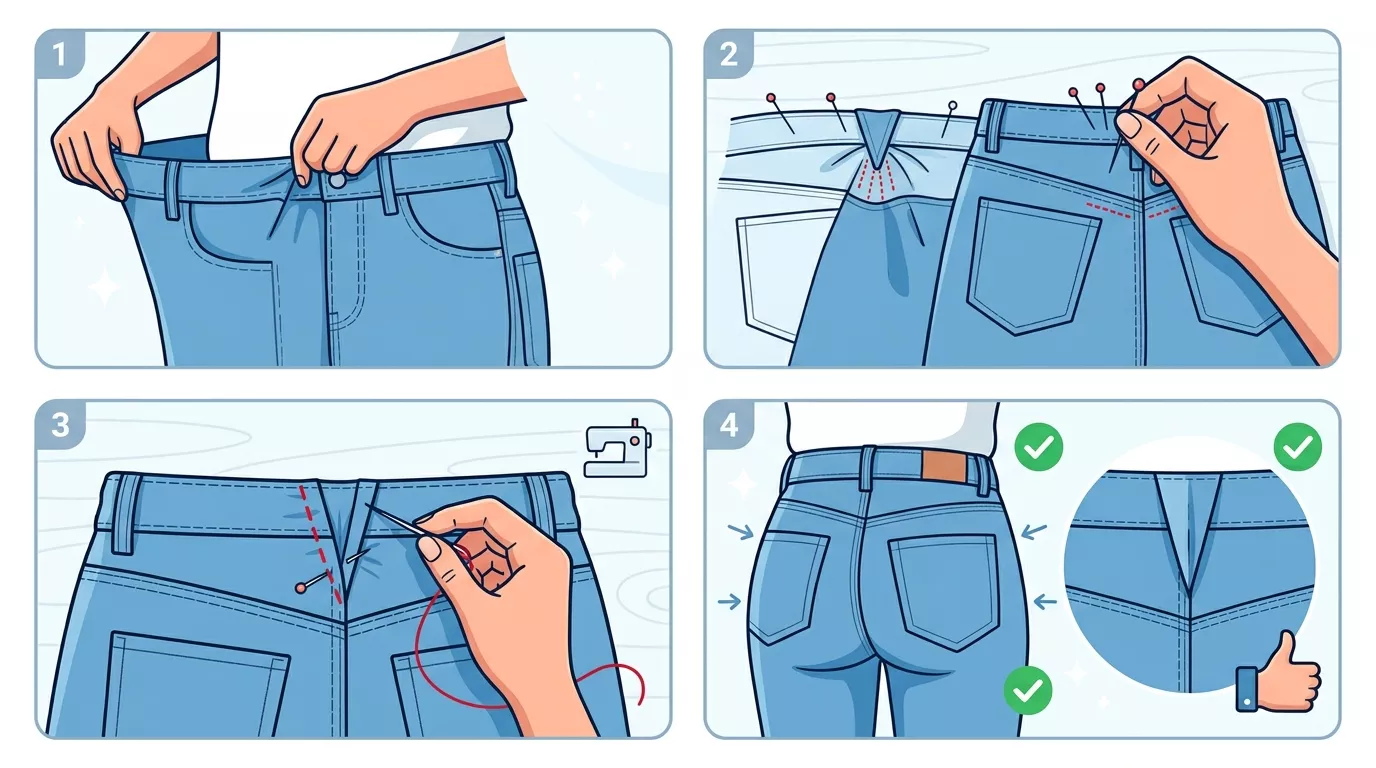
How To Fix Loose Jeans Waist Easily
I pull on jeans that gap at the back and suddenly the whole outfit feels unfinished.
I used to ignore it and hike my top down.
Now I know small fixes stop the slipping and the fidgeting. I can make loose jeans sit right without changing my style or comfort.
How To Fix Loose Jeans Waist Easily
This is how I fix a loose jeans waist so the jeans stay put and the silhouette reads balanced in everyday outfits. I end with a cleaner waistline and far less fidgeting, without changing my look.
What You’ll Need
- Slim leather belt (black, 1-inch)
- Wide statement waist belt (tan suede, 2–3 inches)
- High-rise fitted bodysuit (stretch cotton, neutral)
- Lightweight structured blazer (navy)
- Extra-strong fabric hair tie (no metal)
- Small brass safety pins (pack of 10)
- Low-profile waistband cinch clip (plastic)
Step 1: Check the gap and pick one fix
I start by standing straight and sliding a finger between my lower back and the waistband.
That tells me if it’s a mild slip or a big gap. I pick a quick fix based on how much room I feel so I don’t over-correct.
Visually, this first check shows whether the problem is at the back, the front, or all around. The insight I usually notice is that back gapping behaves differently from front gapping and often needs a different approach.
Small mistake to avoid: don’t assume the solution is the same for every pair—over-tightening a fix can create new bulges.
Step 2: Use a slim belt in the natural waist
I thread a slim leather belt through the loops and fasten it at my natural waist, not the hips. That simple change pulls the waistband toward my waistline and smooths the back silhouette.
I leave the belt tail tucked or clipped down for a cleaner look.
What changes visually is immediate: the jeans stop sliding, and the top sits flatter. One insight people miss is that a narrow belt works better with most denim because it follows the jeans’ seam line.
Small mistake to avoid: tightening the belt until it pinches—doing that ruins comfort and makes fabric bunch above the waistband.
Step 3: Swap to a fitted top or bodysuit for cleaner lines
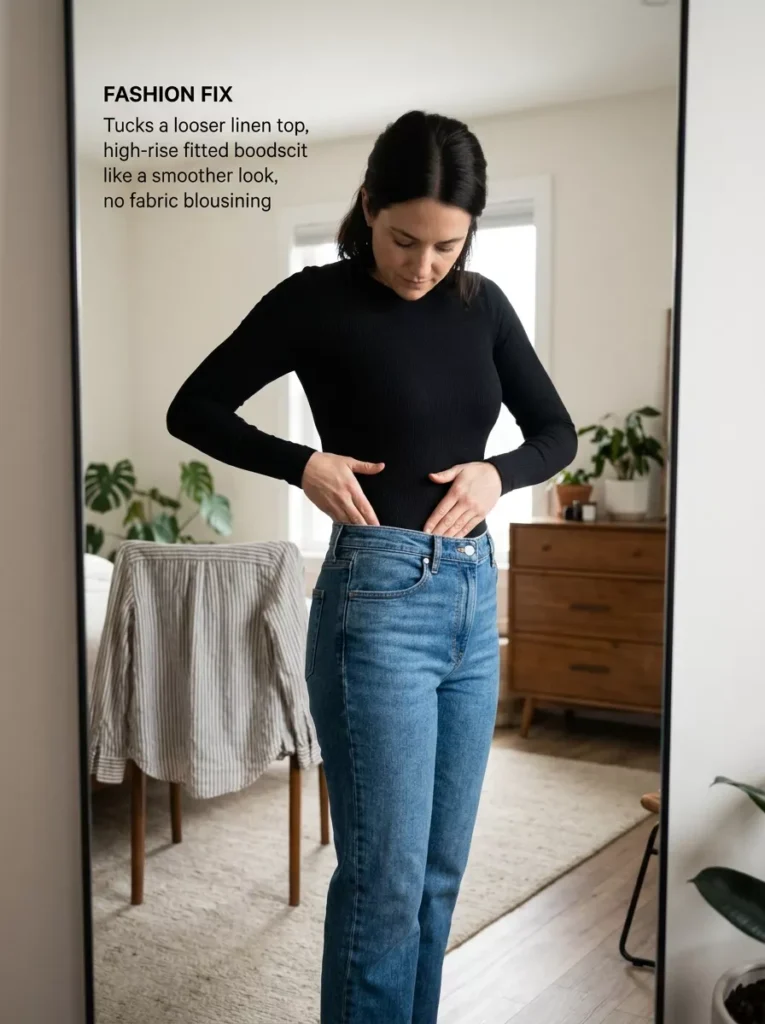
If the belt alone still feels fussy, I switch to a high-rise fitted bodysuit or a neatly tucked stretch cami. I press the top flat into the waistband so there’s no blousing.
The result is a smooth connection from top to jeans and less fabric to slide.
Visually the waist reads cleaner and straighter. An insight I picked up: slippery, loose fabrics create the illusion of more gap, so a clingier top often fixes what the jeans can’t.
Small mistake to avoid: over-tucking. Too much fabric shoved in creates lumps and looks worse than the original gap.
Step 4: Cinch discreetly with a hair tie or waistband clip
For a low-key fix I loop an extra-strong fabric hair tie through the two back belt loops and knot it behind the waistband.
This pulls the back in without visible hardware on the front. I use a low-profile cinch clip if I want something neater and faster.
The visual change is subtle: the tush line sits higher and the top drapes better.
One insight I rely on is that this trick works best on moderate gaps and mid-to-high rise jeans. Small mistake to avoid: leaving the tie visible or pulling it so tight the denim puckers; that looks makeshift instead of tidy.
Step 5: Balance the look or choose tailoring for a permanent fix
After I fix the waist, I check proportions. If I want a casual, relaxed finish I add a structured blazer or a wide statement belt to anchor the waist.
If the gap is persistent and bothers me regularly, I take the jeans to a tailor for a small take-in at the waistband.
Visually, a blazer or wide belt reads intentional and hides tiny gaps.
An insight I’ve learned is that small tailoring changes keep the overall fit while preserving the jean’s character. Small mistake to avoid: adding too much bulk on top to hide the gap—that just makes the outfit look unbalanced.
When I Choose a Tailor
I bring the jeans to a tailor when my quick fixes feel like constant work. I point out where the gap sits and how I like the rise to sit on my waist. A good tailor will take in the waistband or reposition darts without altering the jeans’ shape.
Tailoring is my choice for favorite pairs I want to keep for years. It’s a small investment that pays off every time I wear them.
Quick Fixes I Use Before Leaving
I keep a tiny kit in my drawer: an extra hair tie, a slim belt, and a few safety pins. In the morning I try the hair-tie cinch first, then the belt. If a tuck threatens to slip, I secure the fabric discreetly with a pin inside the waistband.
These quick moves save outfits on the fly and keep me from rethinking the whole look.
Waistband Mistakes I See Often
I often see jeans pulled too tight with a belt to hide a gap—that creates muffin top and tension lines. I also see people add bulky tops to conceal a loose waist; that just adds volume.
Better is a small, specific adjustment: a fitted top, a narrow belt, or a tiny tailor alteration. Those keep the silhouette clean and intentional.
Final Thoughts
Start with the smallest fix and see how it feels. I prefer simple tweaks first—belt, bodysuit, hair-tie cinch—then tailor if needed. Trust the fit that feels comfortable and looks balanced. A small change can stop the fidgeting and make the outfit feel finished.