How To Style High Waisted Jeans
I stand in front of my closet and freeze when I pull on high waisted jeans. The top often looks either swallowed or shouty. I want balance, not fuss.
I learned small tweaks that make the outfit feel intentional and comfortable.
How To Style High Waisted Jeans
This is the method I use whenever high waisted jeans feel too shapeless or too fussy. I end up with balanced proportions, cleaner lines, and outfits that feel intentional and easy to wear.
What You’ll Need
- High-rise straight-leg rigid denim, medium blue
- High-rise skinny black stretch denim
- Fitted rib tank, neutral (ivory or black)
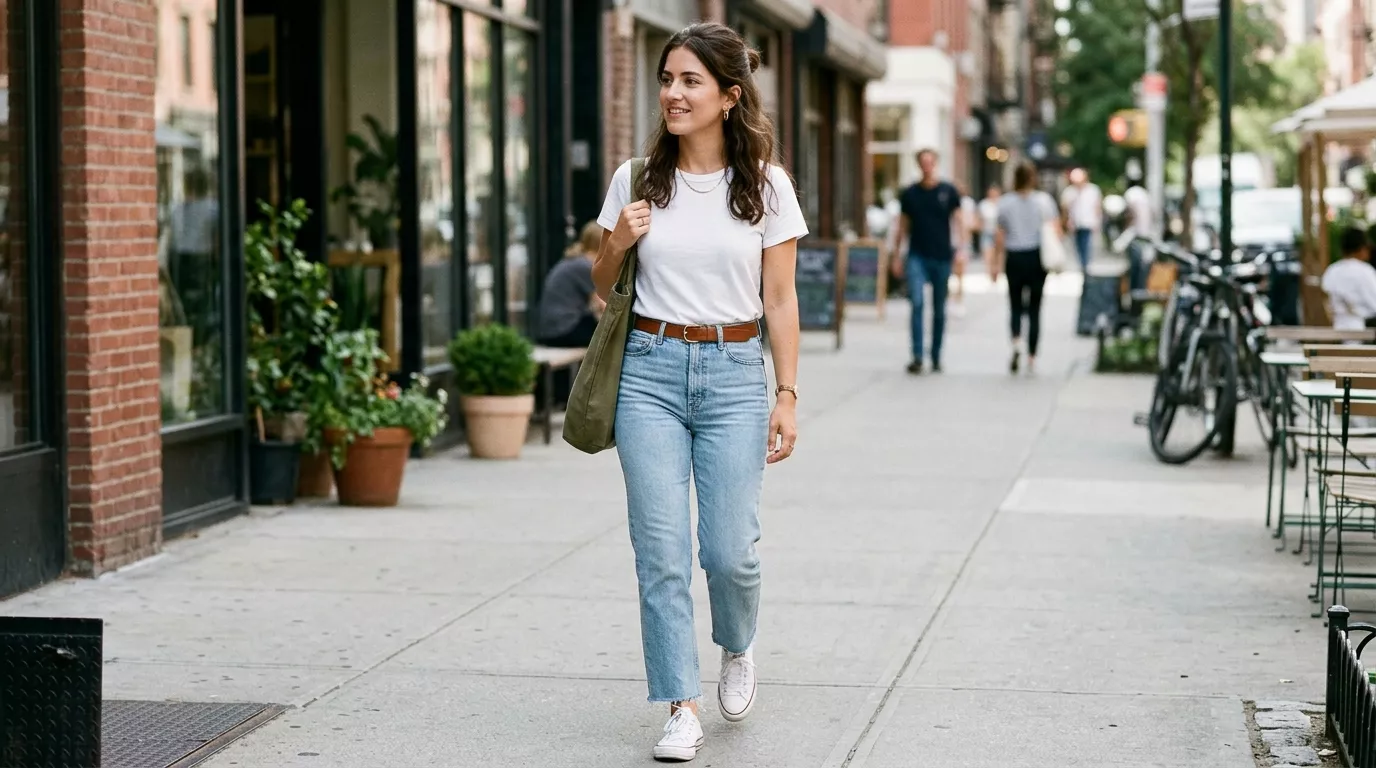
- Slim cotton tee, white
- Lightweight tucked blouse, silk-viscose, pale color
- Cropped structured blazer, neutral (beige or black)
- Slim leather belt, 1-inch, black or brown
- Ankle boots with 1–2 inch heel, leather
Step 1: Start with the base fit—check rise, waist, and seat
I put the jeans on and stand. I notice where the waistband hits and how the seat behaves. If the waist gaps or the crotch droops, the whole outfit looks sloppy even with the right top.
Fixing the fit visually sharpens the silhouette and makes everything else easier.
One insight I learned is that a small gap at the back ruins tucked-in looks more than a slightly snug front.
A common mistake is forcing a too-small size; that creates awkward tension across hips and pockets. I pick the pair that sits comfortably at my natural waist and moves with me.
Step 2: Choose top volume deliberately—fitted vs relaxed
I decide whether the top should be fitted or have some volume. With straight-leg rigid denim I often choose a fitted rib tank to keep the line clean.
With relaxed or oversized jeans I let a slightly loose blouse tuck in to keep proportion balanced.
The top’s volume changes the perceived waist and leg length.
People often miss fabric weight. A floppy blouse can read like extra bulk. The small mistake is leaving a long, heavy top fully untucked—this makes the jeans disappear.
I prefer a neat tuck or a deliberate half-tuck to show where the waist sits.
Step 3: Define the waist—belt or structural layer
I add a slim belt or a cropped blazer to mark the waist. The visual change is immediate: the torso reads as intentional and the leg line looks longer.
A lightweight blazer that hits at the waist gives structure without adding bulk. A thin belt draws the eye to the smallest part of my torso.
An insight I didn’t expect was that belt color and finish can either calm or fight the rest of the outfit.
The small mistake is choosing a belt that’s too wide or too contrasting; it breaks the outfit rhythm. I stick to slim, tonal belts unless I mean for the belt to be the focal point.
Step 4: Tweak hem and shoe pairing for proportion
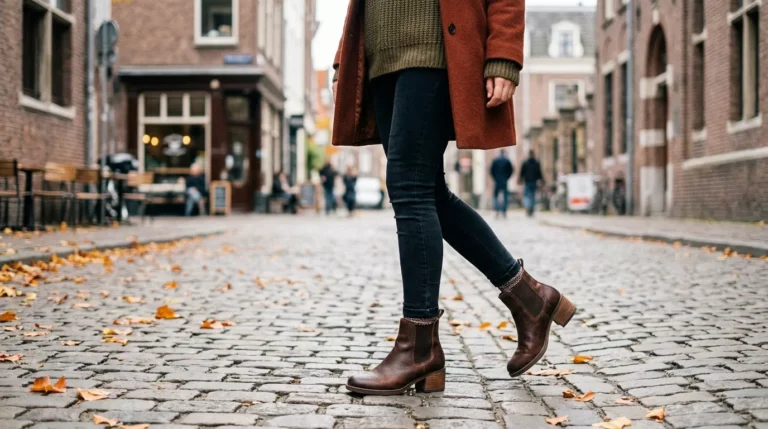
I check the hem against the shoes. Cropped jeans or a small cuff with ankle boots shows just enough ankle and keeps proportions light.
With heels I let the jeans skim the shoe; with flats I might cuff slightly to avoid a swallowed foot. The visual change feels immediate—legs look longer or more grounded depending on the shoe.
One insight I rarely read about: a slight heel adds length that a tighter top can’t fake.
A common mistake is over-cuffing heavy denim so it looks sloppy. I aim for a neat cuff or clean raw hem that complements the shoe choice.
Step 5: Layer thoughtfully—outerwear and final touches
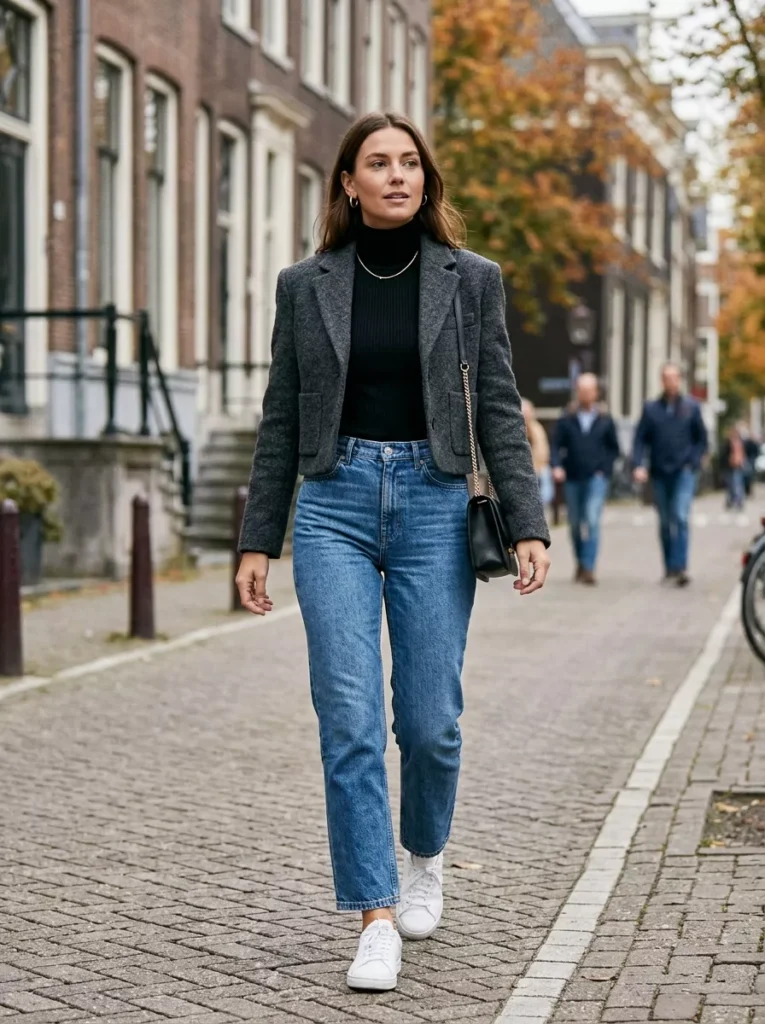
I add outerwear last and watch the overall balance. A long, boxy coat can hide the waist and flatten the look; a cropped coat or a coat with a defined waist keeps the silhouette clean.
Small accessories—simple hoops, a compact bag—finish the outfit without fighting the proportions.
I noticed that fabric weight of the outer layer shifts the outfit’s mood more than color.
A thin trench reads casual and clean; a heavy parka can overwhelm a fitted top. A mistake I avoid is piling on bulk; I prefer one structural piece and light accents.
Fit and Length Tips
I pay attention to ankle exposure and hem break. Straight-leg jeans that hit just above the ankle pair well with low boots and loafers. Longer skinnies that sit over the shoe need a slim top to avoid looking top-heavy.
Quick notes I use:
- Above-ankle hem: shows shoes, lightens the look
- Slight break: works with heels for a polished line
- Too-long hem: can look messy unless intentionally stacked
Top Pairings That Work
I keep a small rotation of tops that play well with high waists. Fitted tanks for clean lines. Lightweight blouses for soft volume. Cropped blazers for structure. Each pairing changes how the waist reads and how comfortable the outfit feels.
Common combos I reach for:
- Rib tank + straight denim + ankle boots
- Slim tee + blazer + high-rise skinny denim
- Tucked blouse + slim belt + loafers
Accessories and Proportions
I use accessories to fine-tune balance. A slim belt defines the waist. A medium-sized bag keeps scale with high-waisted bottoms. Jewelry stays simple; I let the silhouette do the talking. Small changes in accessory size shift perceived proportions more than expected.
My quick checklist:
- Belt: slim and tonal for subtle definition
- Bag: medium, structured for scale
- Shoes: match heel height to the top’s volume
Final Thoughts
Start with one adjustment and wear it for a day. I found small changes stick faster. Trust the mirror and how the outfit feels.
I rarely overhaul the whole look. I tweak hem, top volume, or belt. Those small edits make the jeans feel intentional. Confidence follows fit. Start small.