How To Style Boyfriend Jeans
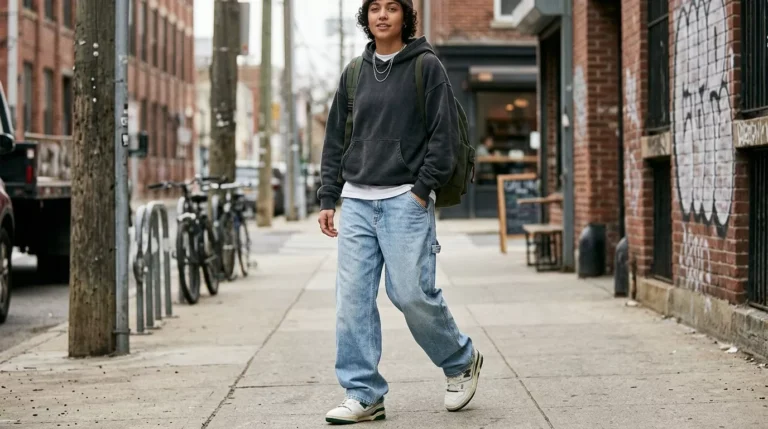
I love the relaxed fit, but sometimes they go shapeless. I stand in front of my mirror wondering whether to cuff, tuck, or add heels. I want comfort that reads intentional, not sloppy.
I keep details small and practical. This is what I do when the jeans feel “off.”
How To Style Boyfriend Jeans
This is the method I use every time an outfit feels unfinished. You’ll learn how to keep the relaxed vibe while giving the look shape, balance, and purpose. The end result is jeans that feel comfortable and look considered.
What You’ll Need
- Mid-wash, high-rise boyfriend jeans (relaxed through hip, tapered at ankle)
- Slim-fit white tee (soft cotton, slightly cropped or tuckable)
- Fitted lightweight blazer (neutral color, slight shoulder structure)
- Slim leather belt (medium-width, matte finish)
- Pointed-toe ankle boots (leather or suede, slight heel)
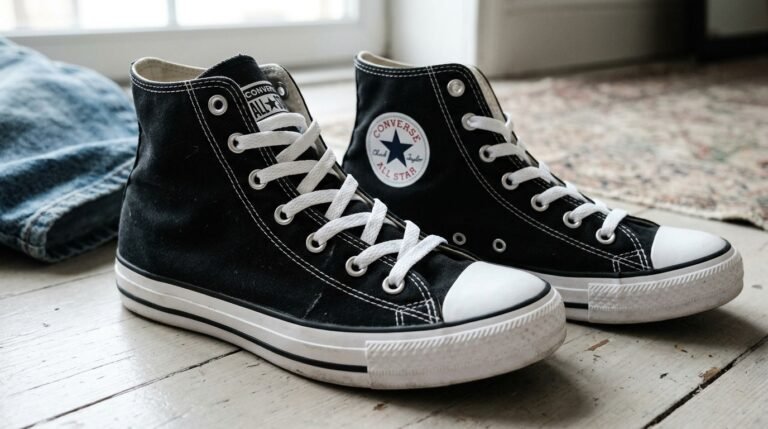
- Clean white low-profile sneakers (minimal details)
- Fitted thin knit or turtleneck (neutral tone, close to the body)
Step 1: Choose the right fit to keep your shape
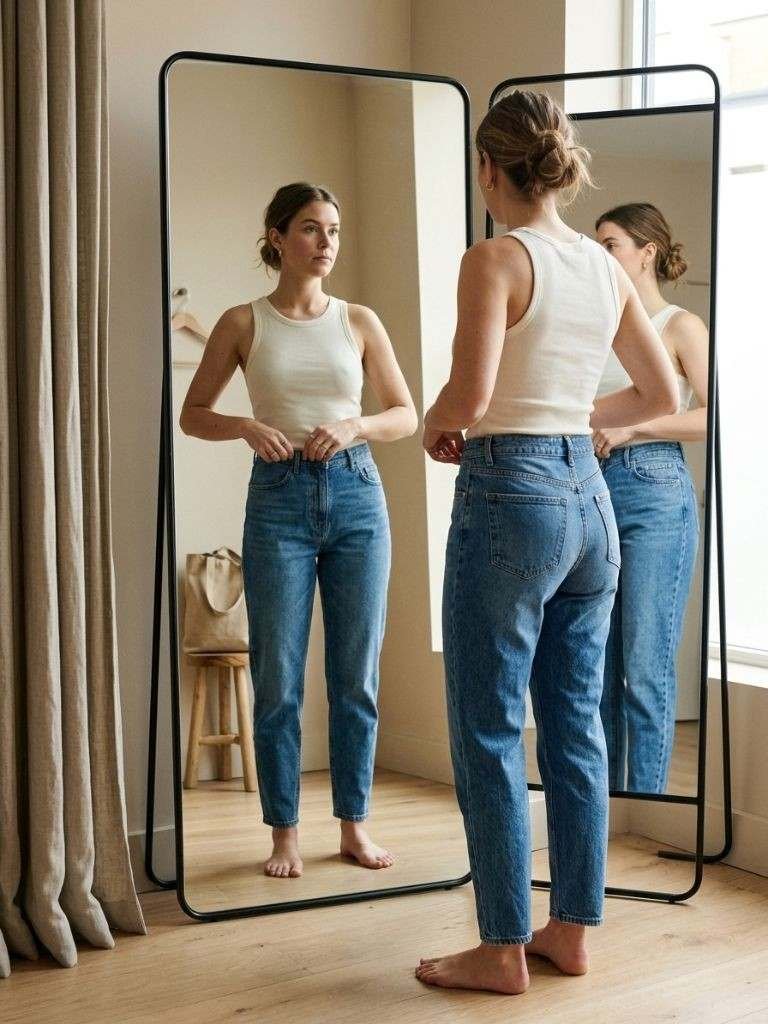
I start by trying on the jeans without anything on top. I watch how they sit on my waist and hips. If they hang below my natural waist and swamp my hips, they read baggy not relaxed.
Visually, a higher rise pulls the fabric up and shortens the torso length the eye reads. I look for a gentle taper at the ankle so cuffs sit cleanly. The insight I miss less often now is that leg opening matters more than length. A common mistake is buying jeans that are too wide through the thigh; they erase my shape.
Step 2: Anchor the waist with a tuck or belt
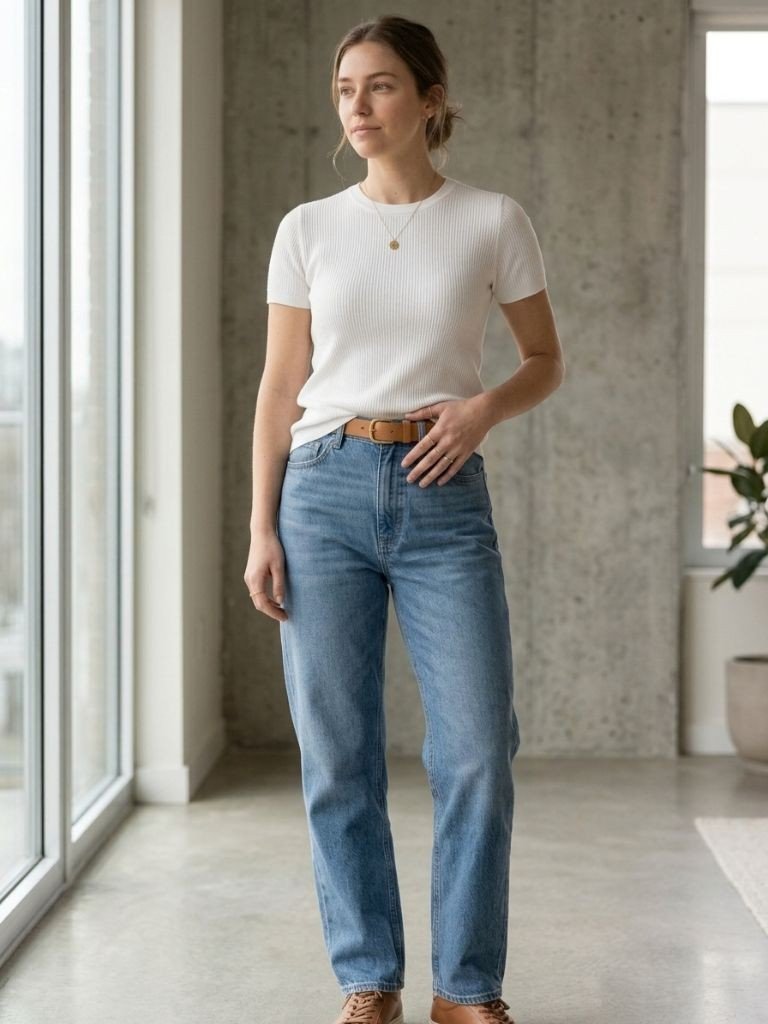
I decide whether to tuck based on what I’m wearing on top. With a slim tee or knit I do a half-tuck to show the waistline. When I tuck, the outfit reads intentional and the proportions shift upward.
If the tee is long or boxy, I add a slim belt to create a focal point. Visually the belt shortens the torso slightly and gives the jeans purpose. One insight people miss is that even a small belt makes denim look tailored. Avoid over-tightening the belt; that creates unflattering bulges.
Step 3: Balance volume with fitted layers or structured outerwear
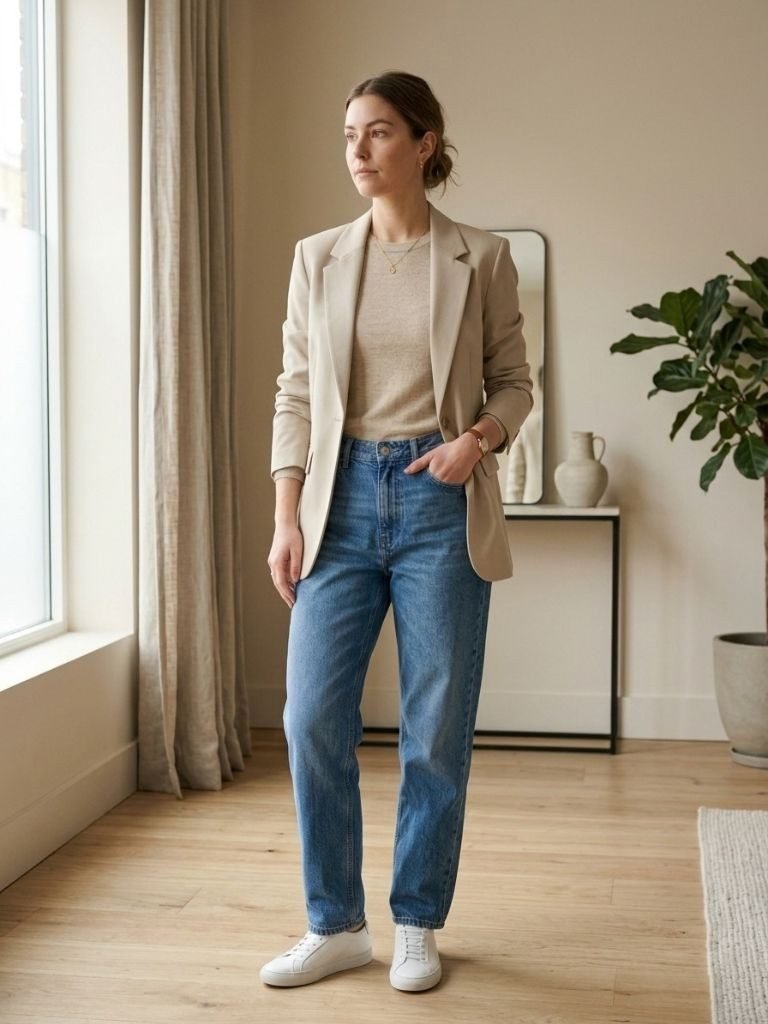
I pair relaxed jeans with something that gives shape above the hip. A fitted knit or a slightly structured blazer does the work. The opposite — another oversized piece — usually makes the whole outfit look unplanned.
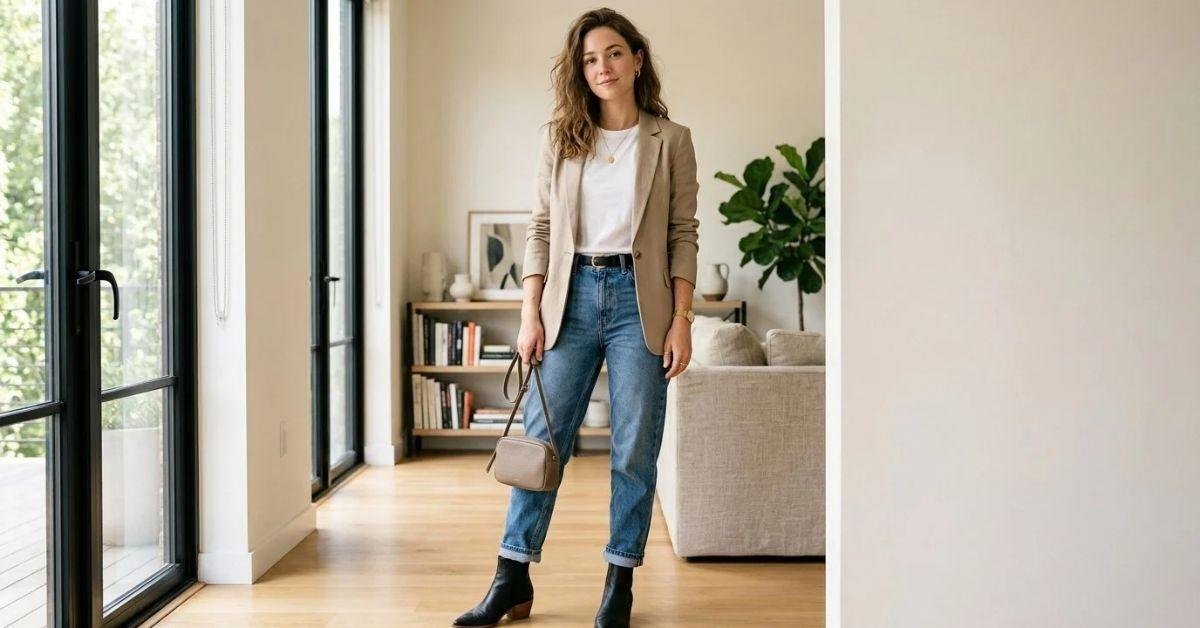
When I add a blazer I let the sleeves hit just at my wrist. That small structure makes the lower half feel deliberate. People often forget sleeve and shoulder balance; it’s subtle but essential. One mistake I avoid is choosing a blazer that’s too boxy — it competes with the jeans instead of balancing them.
Step 4: Set the proportions with your shoes
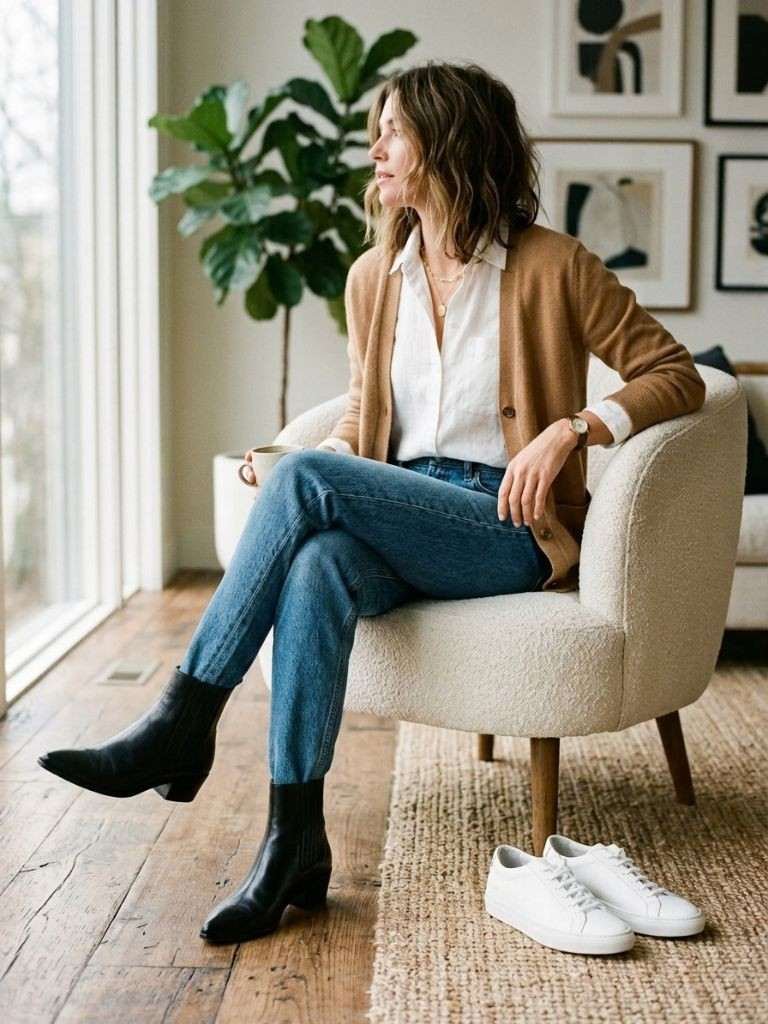
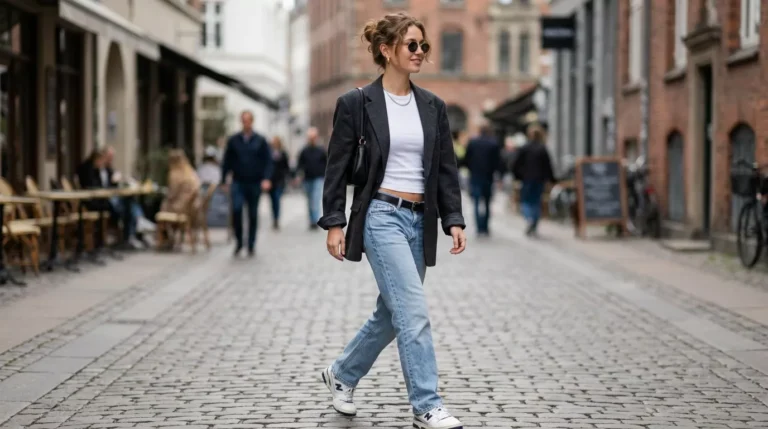
I pick shoes to define the outfit’s mood and lengthen or anchor my legs. Pointed-toe ankle boots with a small heel lift the silhouette and make the jeans feel polished. Clean low-profile sneakers keep the look casual and tidy.
Visually, shoes change where the eye stops. Boots that close at the ankle create a vertical break; sneakers create a softer end. The insight I lean on is that heel height changes perceived pant length more than a cuff. A tiny mistake to avoid is chunky shoes that overwhelm a slim cuff — they make the jeans look sloppy.
How to cuff or roll for purpose
I use the cuff to show footwear and ankle. A single wide cuff reads casual and controlled. Two thin cuffs feel messy on relaxed denim.
If I want a cleaner line, I roll very small or not at all. I also use the cuff to adjust pant length without hemming. Small bullet points I watch:
- One wide cuff for a relaxed, edited look
- Minimal roll when wearing pointed boots
- No cuff with long boots or when wearing heels
Switching between casual and dressier looks
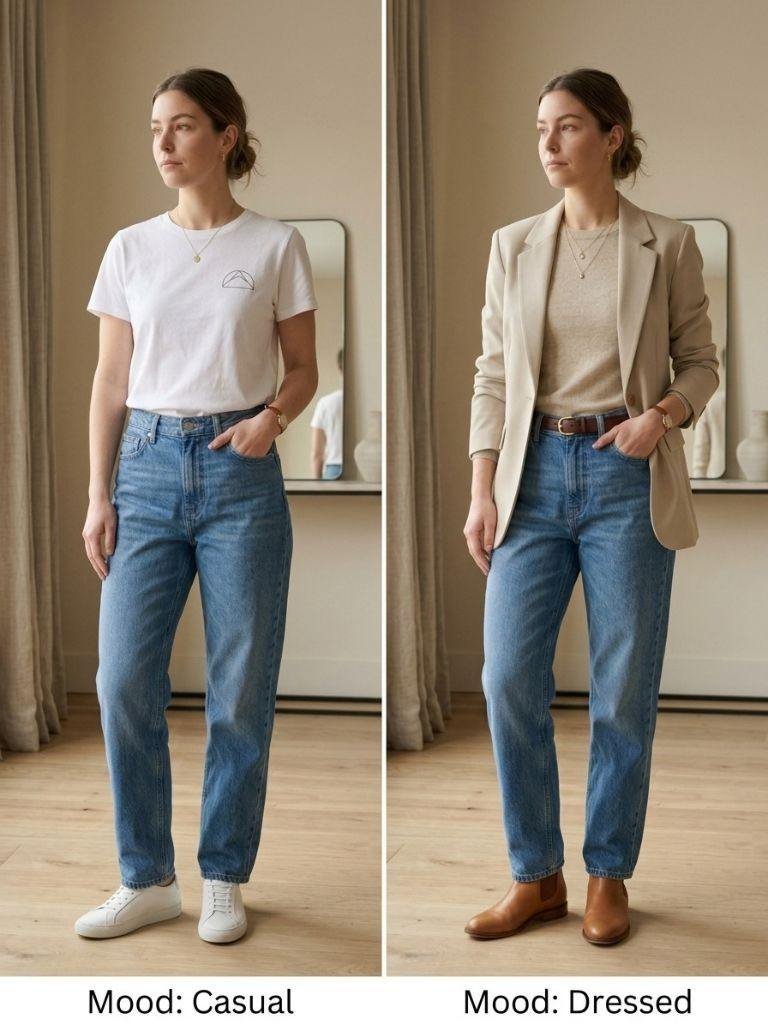
I treat boyfriend jeans like a mood switch. Sneakers, a tee, and minimal jewelry stay casual. Swap in boots, a tucked knit, and a blazer to lift the outfit.
I keep the same jeans and change the focus. Small accessories like a slim belt or delicate necklace tilt the outfit toward dressed. I try the full look in daylight — it shows whether the pieces read cohesive. The key is subtle shifts, not full replacements.
Quick fixes for common problems
If the jeans feel too baggy at the knee, I tighten the waist and add a fitted top. If they look short and boxy, I lengthen the line with boots or avoid a heavy cuff. If the ankle looks bulky, I choose a slimmer shoe.
I assess every outfit by standing, sitting, and walking. Movement reveals imbalance faster than a mirror. When something still feels off, I remove one layer and try again.
Final Thoughts
Start with one small change. I usually try a tuck or different shoes first. Build from what feels comfortable.
I remind myself that relaxed doesn’t mean sloppy. A few thoughtful choices make the jeans read intentional.