How to Care for Leather Boots the Right Way
I kept reaching for the same boots every week, but something always felt off.
The leather looked tired after a few wears, and no matter how I styled them with jeans or a longer skirt, the whole outfit sat a little flat.
I tried wiping them down quickly, but that never fixed the dull surface or the way they started to feel stiff.
It took me a while to notice the connection.
When the boots weren’t cared for properly, they didn’t move with the rest of the look the way I wanted. The proportions felt slightly wrong, and I would end up changing outfits at the last minute.
How to Care for Leather Boots the Right Way
This is the simple routine I follow so the boots keep their shape and color. It helps them sit comfortably with whatever else I’m wearing and removes that tired finish that throws off an otherwise balanced outfit.
What You’ll Need
- Soft horsehair brush with rounded bristles
- Neutral leather conditioner in a small tin
- Cotton flannel cloth cut into squares
- Cedar boot trees sized to your boots
- Beeswax-based waterproof balm
- Wooden boot jack for easy removal
Step 1: Remove surface dust before anything else
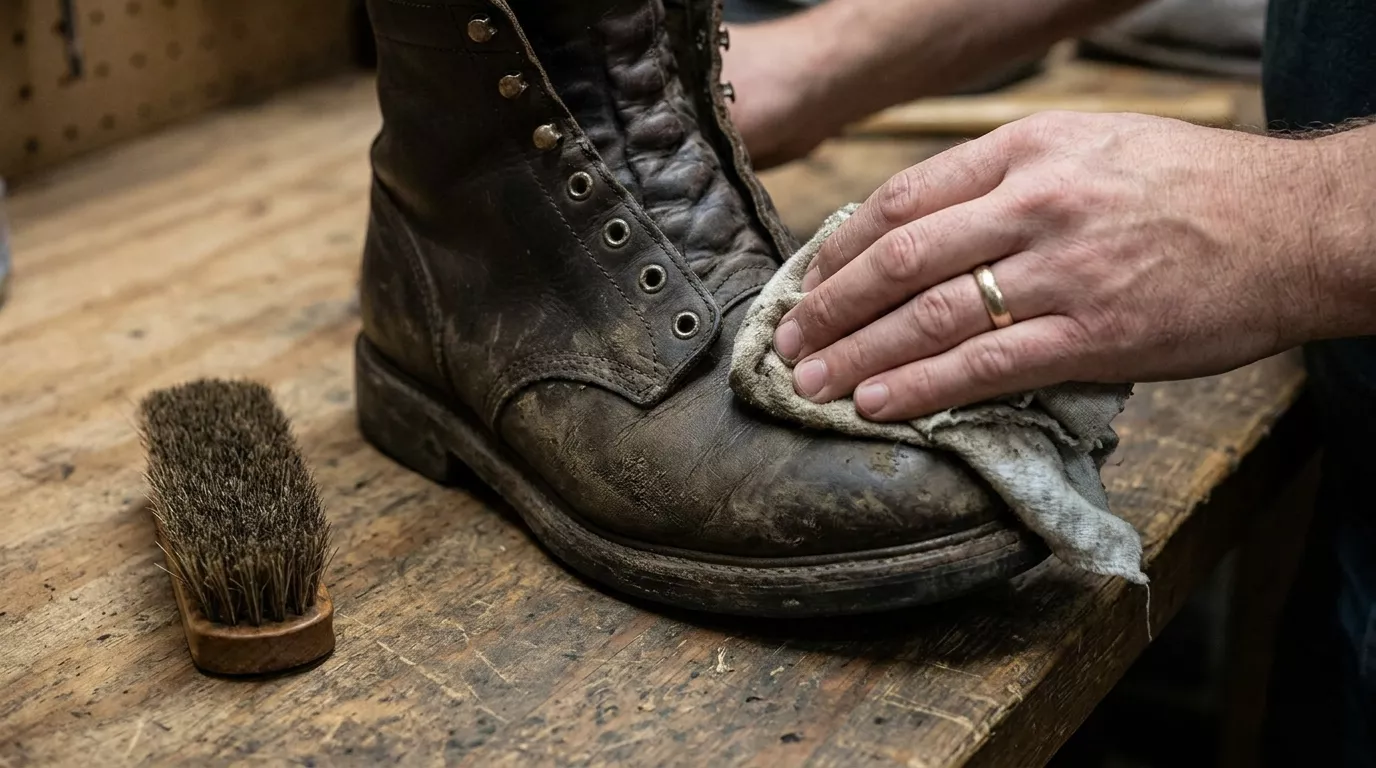
I brush the boots lightly from top to bottom while they are still on my feet. This shows me exactly where the leather has picked up marks from daily walking. The movement helps me feel which areas have started to dry out.
Once the dust is gone, the leather looks more even right away.
I can see the natural grain again instead of a gray film that makes everything look the same color.
Most people skip this and go straight to wiping, which just pushes the dust around.
I avoid pressing hard at this stage because that can press fine grit into the surface and create tiny scratches that show up later.
Step 2: Work the conditioner into the dry spots only
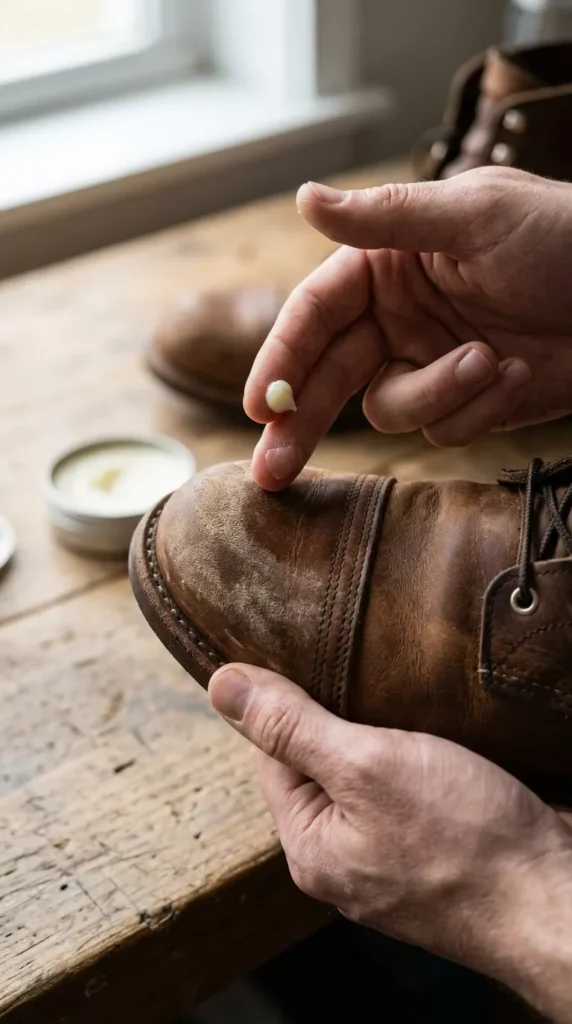
I warm a small amount of conditioner between my fingers and press it into the areas that look lighter. I work in small circles and stop as soon as the leather starts to darken slightly.
This keeps the finish from becoming too heavy or shiny in the wrong places.
The boots feel softer immediately, and the color evens out across both feet. That small change makes them sit better next to whatever trousers or skirt I plan to wear.
A common mistake is covering the whole boot at once, which can leave some areas too slick while others stay dry. I only treat the sections that actually need it.
Step 3: Let them rest with the trees inside
After the conditioner settles, I put the cedar trees in and leave the boots standing upright. The wood absorbs a little moisture and helps the leather keep its original width and height. I usually do this overnight.
The next day, the boots feel more stable when I put them on.
The ankles do not collapse inward, so the hem of my trousers or the line of a dress falls the way I intended.
I used to roll them up or stuff them with paper, which sometimes created new creases. The trees prevent that without forcing the shape.
Step 4: Add a light layer of waterproof balm before going out
I rub a thin film of the balm over the toes and heel only when rain is likely. Too much makes the leather look coated, so I wipe away any excess with the cloth until nothing feels sticky.
This step keeps water from sinking in and changing the color unevenly.
The boots still look like part of the outfit instead of something that has been through weather.
The thing most people miss is that a heavy coat actually attracts more dirt. A very light layer is enough to protect without changing the texture.
Step 5: Check the fit again after each wear
I slip the boots on and stand in front of a mirror to see how they sit with the rest of what I’m wearing. If one boot feels tighter after a rainy day, I know it needs another light brushing before I store it.
This quick check tells me whether the care routine is working. The leather should still move when I walk without feeling either too loose or too tight around the ankle.
Avoiding the habit of just kicking them off means they last longer in the rotation and keep looking intentional with my clothes.
Checking the Color Match
I hold both boots side by side under the same light I will wear them in. Small differences in tone become obvious this way and can usually be fixed with another quick pass of conditioner on the lighter areas.
This keeps the pair looking like one item instead of two separate pieces.
Rotating With Other Shoes
I try not to wear the leather boots two days in a row. Giving them a full day to rest helps the leather settle back into its shape.
The rotation also prevents the kind of creasing that happens when the same pair is used constantly.
Storing Them Correctly
When the season changes I put the boots in a cotton bag rather than a plastic one. The fabric lets air move while keeping dust off.
I keep them away from direct heat so the leather does not dry out too fast between wears.
Final Thoughts
Start with just the brushing and conditioning steps. That alone changes how the boots sit with your other clothes.
You will notice the difference the next time you reach for them. Small, regular attention keeps everything feeling balanced without extra effort.