How to Wear Ankle Boots with Confidence
My ankle boots used to sit by the door untouched. I would pull them on with jeans or a skirt and immediately notice how the hem hit in the wrong spot, making everything feel cut off at the ankle.
The boots themselves were fine. It was the way the rest of the outfit met them that threw the balance off every time.
After a few mornings of trying different lengths and tucks, I started to see which small adjustments kept the line clean.
How to Wear Ankle Boots with Confidence
This is the method I use every time an outfit feels unfinished. It relies on checking proportions and fabric placement so the boots settle naturally instead of breaking the line.
What You’ll Need
- Dark wash straight-leg jeans with a 28-inch inseam
- Black leather ankle boots with a two-inch block heel
- Oversized cream crewneck sweater
- Camel wool coat that hits mid-thigh
- Lightweight black turtleneck
- Medium-rise wide-leg trousers in charcoal wool
- Thin brown leather belt
Step 1: Check Where the Hem Lands on the Boot
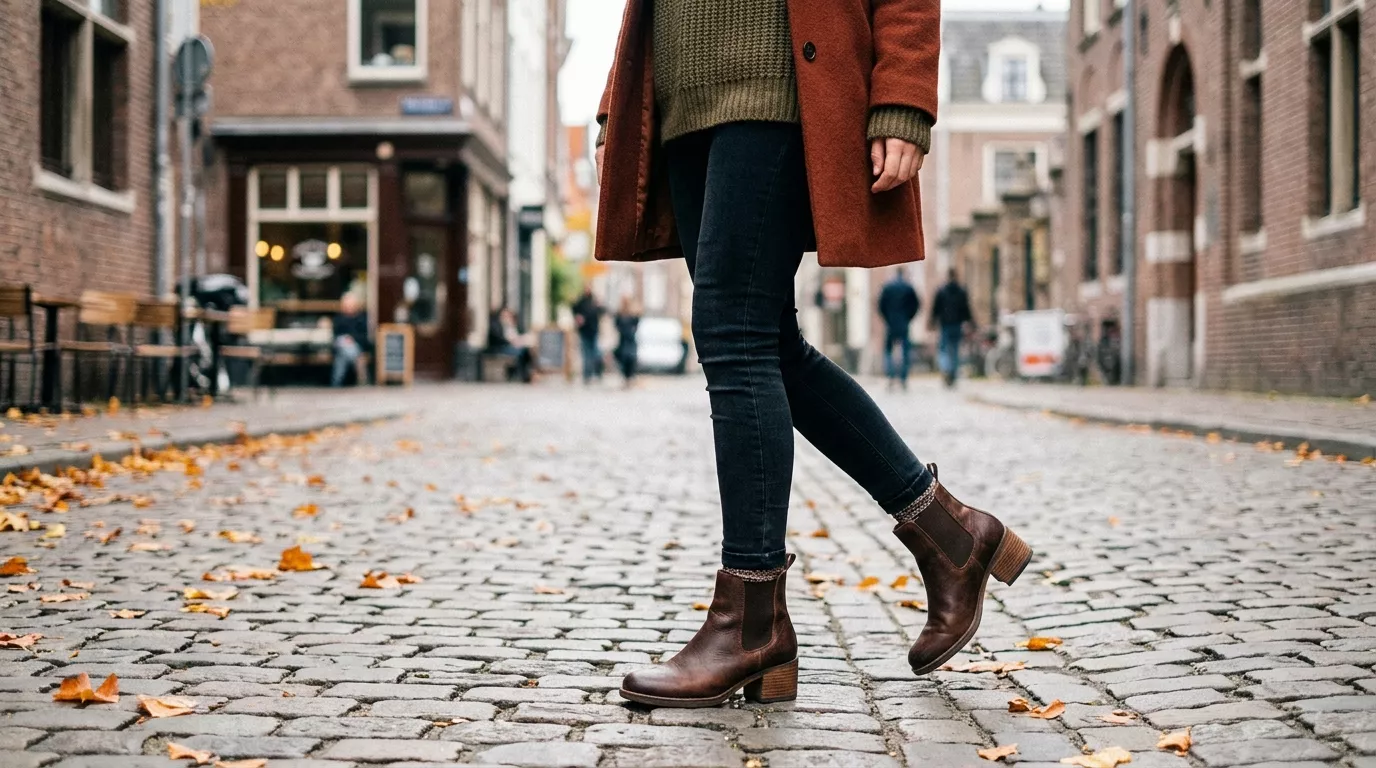
I stand in front of the mirror in just the jeans and boots first. The hem should rest either just above the ankle bone or graze the top edge of the boot without bunching.
When the fabric stops too high, my legs look shorter. When it puddles, the boots disappear under folds and the whole shape flattens. I mark the spot with a quick pinch so I know exactly where the break needs to sit once the rest of the outfit is on.
Most people add the top half before fixing the hem. That extra layer of fabric hides the problem until you move.
Step 2: Keep the Top Half Slightly Loose
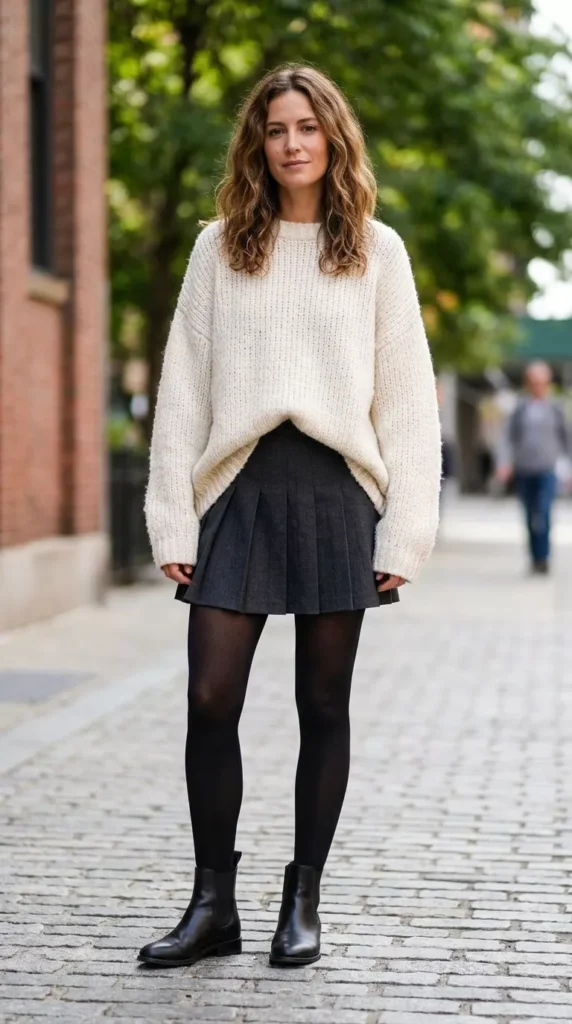
I reach for the oversized cream sweater or the camel coat next. Both add volume above the waist so the narrower ankle line feels intentional rather than abrupt.
The key is that the hem of the top stops well above the boot.
If it lands right at the ankle, the eye stops there, and the outfit feels chopped. Leaving a few inches of torso visible keeps the vertical line moving.
I used to pull everything tight at the waist to look neat. That only made the boots look like an afterthought.
Step 3: Add a Belt When the Proportions Still Feel Off
Some mornings the sweater still swallows the shape. I add the thin brown belt at the natural waist and immediately see the difference.
The belt creates a clear middle point.
Everything above it reads as one section and everything below reads as another, so the boots become part of the lower half instead of fighting it.
Skip the belt if the coat already gives enough structure. Adding it out of habit can make the outfit busier than it needs to be.
Step 4: Test the Outfit While Walking
I take a few steps across the room before I decide the look is done. The boots should stay in place without the hem riding up or the heel catching fabric.
If the trousers are too wide, the fabric catches on the boot shaft.
If the jeans are too tight, the material pulls away at the ankle. One small change, either rolling the hem once or switching to the medium-rise trousers, usually fixes the movement issue.
This quick walk always reveals problems the mirror misses.
Step 5: Repeat the Same Base with Different Tops
Once the jeans and boots work together, I swap the sweater for the black turtleneck.
The lower half stays exactly the same, so I can tell right away whether the new top keeps the balance.
Changing only one piece at a time shows me which parts of the outfit actually need adjusting. It also keeps the process from feeling like starting over each day.
Checking Boot Height Against Your Jeans
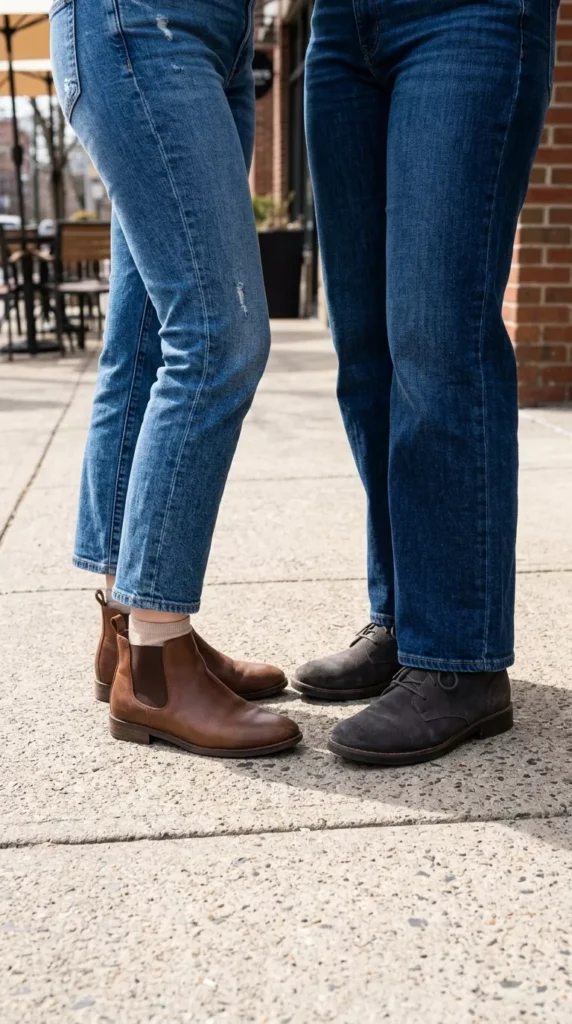
Some jeans work better with a slightly higher ankle boot while others need more coverage. I line up the two in daylight and look for an inch of skin or sock showing between hem and boot top.
If that gap disappears, the outfit reads heavier. A small visible strip keeps the separation clean without extra effort.
Daily Wear and Simple Fixes
I wear the same pair most days because the block heel stays comfortable for walking. When the leather starts to crease at the flex point, a quick polish brings the surface back without changing the fit.
If an outfit still feels flat, I add the belt before reaching for different shoes. That single adjustment solves more problems than swapping the boots.
When the Look Still Feels Short
On colder days the coat adds length, but only if the hem clears the boot by several inches. Anything shorter collapses the line again, so I leave the coat open rather than buttoned if the proportions shrink.
Final Thoughts
Start with the jeans and boots alone. Once that base feels right, the rest of the pieces fall into place more easily.
Small checks in the mirror and a short walk are usually enough to confirm the balance. The goal is not perfection but an outfit that moves naturally through the day without needing constant adjustment.